
When filling out an online auto shipping quote, you will first be asked where your pickup location is and where delivering to. Distance significantly impacts cost estimation, timing, route availability, and planning of carriers. Comprehending how quote forms estimate car transport distance lets you enter better data, compare quotes with more confidence, and avoid confusion when planning your shipment.
The distance for vehicle transport isn’t always calculated as a straight line between two places. The carriers mostly consider the routes actually used by the vehicles for driving, highway connectivity, conditions of loading point, conditions of delivery point, fuel cost, demand on route, and whether the vehicle is getting through common carrier lanes or less common lanes. This guide will explain how quote forms work and how to properly use them and where.
Input the correct pickup and drop location
Ensure that your location details are correct to get a better estimate. Calculating the distance for transport done by using the ZIP code, city or the full address. A ZIP code is often sufficient for an estimate but providing a full address may help achieve a better level of accuracy later on.
For example, shipping a car from downtown Los Angeles to downtown Dallas may result in a different price than shipping from a rural town outside Los Angeles to a tiny community outside Dallas. Although the cities might sound close, the carrier access and route distance can affect the final quote.
Do not guess ZIP codes when using a quote form. If shipping from a dealership, auction, apartment complex, military base, garage, or storage unit, please verify right location before submitting form. More realistic estimate usually come from better input.
Acknowledge that distance refers to driving route not straight line
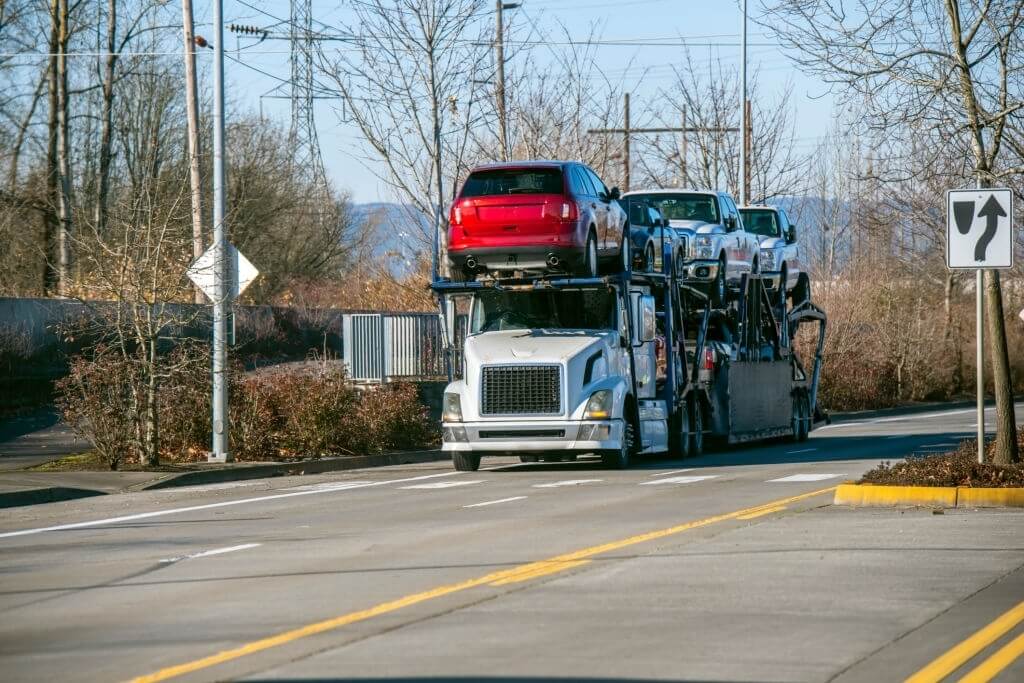
One of the biggest mistakes is thinking that the distance is measured as the crow flies. Auto carriers don’t go in straight lines. They travel future highway routes, truck routes, and safe loading areas which they are approved on.
This is the reason that the vehicle transport distance quote forms rely heavily on the routing map. A shipment may appear short on a map but require additional driving owing to mountains or restricted roads, ferry crossings, traffic-heavy metro areas and limited truck access.
Two towns may be 300 miles apart as the crow flies, but they may be 380 miles apart when measured along the carrier route that is truck-friendly. This additional distance may impact fuel, time, driver scheduling, and quote range.
Take into account route popularity as well as carrier availability
Distance matters ,but it not the only important factor. The route’s commonality considered for quote forms. Common routes among major cities often have more carrier traffic and help schedule easily. Infrequent routes may need more orchestration.
For instance, shipping a car from Miami to Atlanta is likely to be easier to price than shipping from a mountain town to a rural place in a different state. Carrier availability may differ even if the miles are the same.
When truck traffic is higher on busy routes, they may deliver faster pickup. During peak seasons, high demand can also impact pricing and timing, however. This is why instant quote tools are handy, as they give customers a quick starting point until they talk with a transport professional.
Fill in the Vehicle and Service Details correctly
The quote form thinks only for distances. It may also ask for the vehicle year, make, model, running condition, type of transport, and pickup date. The estimate is improve with this info.
A small sedan generally requires less loading space than a large pickup truck, SUV, or van. Sometimes you may need special loading equipment to load an inoperable vehicle. Enclosed transport is more expensive than open transport because the carrier that uses an enclosed transport has lesser availability.
The time you want picked up also matters. If you require urgent shipping, the quote may be higher because of less scheduling flexibility from the carrier. The shipment may be easier to match with drivers if you can provide a wider pickup window.
To get the most accurate estimate, be truthful and specific. Don’t ever list a non-running vehicle as running. When you already know that you need enclosed shipping, don’t choose open transport. Accurate details can prevent changes to the quote at a later date.
Use the estimate as a clever starting point
An online quote is a helpful estimate and not always a final guarantee. The price may vary, once shipment details are reviewed, based on precise addresses, carrier capacity, vehicle condition, seasonal demand, delivery acceptance.
The quote form remains as worthy nonetheless. Essentially, the formation is the first step to planning. Turning to anything like this would assist you to have some sense of what to expect so you wouldn’t go into something blindly.
Once you receive your quote, check the pickup and delivery details closely. Check if the locations can accommodate large carriers. See if your choice of dates is flexible. Inquire about the better option for your vehicle open or enclosed transport.
If the quoted price seems surprisingly low, ask what’s included. If it looks high, ask whether flexible dates or nearby pick-up points could help. A good quote process helps define the next steps rather than clouding them.
Closing Remarks
Knowing how quote forms estimate distance for vehicle transport makes you a smarter auto shipping customer. The form which is design in such a way that it will use the pickup and delivery details, actual driving routes, route demand, vehicle size, transport type, and timing will create an estimated cost.
To get the best result, be accurate with your locations, understand the carrier will take real road routes, give honest vehicle details, and consider the quote just a starting point when planning. For your initial vehicle transport comparison, click here.
